Proton EMAS3
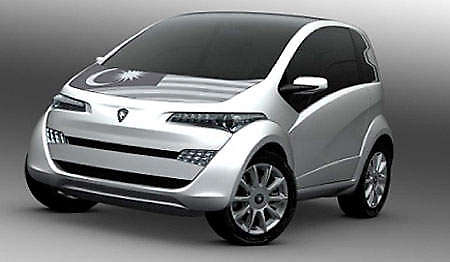
Proton’s range of concept hybrid city cars have been officially unveiled in Geneva today and we now know that they are called the EMAS, the EMAS Country and the EMAS3. For non-Malaysians reading this site, EMAS basically means gold in Bahasa Malaysia, but in this context it also stands for ‘Eco Mobility Advance Solution’. The cars were unveiled at Italdesign Giugiaro’s booth by our ex-PM Tun Dr. Mahathir Mohamad, who so happens to also be Proton’s advisor.
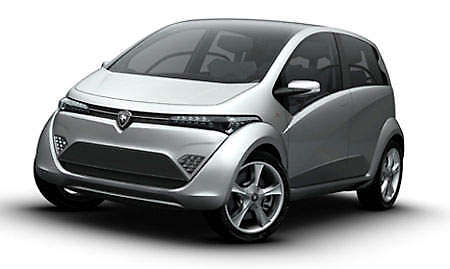
The EMAS is the 5-door 4-seater silver hatchback that we first saw. The other two models are the EMAS3, which is a three-door 3+1 seater for city driving, and the EMAS Country which is for country driving – that’s the model with the SUV styling and raised suspension. The concept cars were designed by Italdesign-Giugiaro to fit the description of a compact car with the passenger room of an SUV.

Proton EMAS
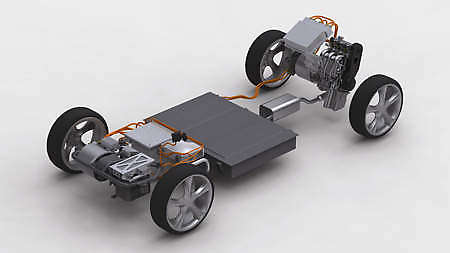
The EMAS range of vehicles all run on a common platform that can spawn some other body variants such as a small van for short commercial trips around the city. The chassis has a wheelbase of 2,590mm (the shorter EMAS3’s wheelbase is 2,035mm). Imagine a small zero emissions and silent van used by Pos Malaysia to deliver your mail and parcels! The batteries are positioned somewhere at the centre of the car. The Lotus Range Extender engine is mounted at the front.
It’s basically a 1.2 liter inline-3 engine that’s designed to run only specifically as certain RPM ranges, since it does not drive the wheels directly but only generates power to recharge the batteries. This means it does not necessarily have to rev very high. Drive torque is provided by the electric motor. So it is not surprising that the 1.2 liter engine’s peak power is 51 horsepower at a very low 3,500rpm.
Because the engine does not have to rev high, Lotus can design it for a lower redline and certain parts such as valve springs and etc do not have to be built to tolerate higher speeds. This can save weight and cost – and the result is an engine that weighs only 56kg according to the original specs. But in any case, the specs that was unveiled here is actually slightly more powerful than what Lotus initially announced when they introduced the range extender engine. The original Lotus Range Extender press release quoted two different power generation points depending on load – 20hp at 1,500rpm and 47hp at 3,500rpm. The engine can run on gasoline, ethanol, methanol or natural gas.
The electric motor outputs a continuous power of 45kW and a peak power of 75kW. The motor’s torque output is pegged at 240Nm at peak, and does not require the use of a gearbox, so the motor drives the rear wheels through a fixed ratio. 0 to 100km/h tales 14 seconds, the car’s top speed is 170km/h, and one battery charge’s worth of range is 50km before the internal combustion engine needs to kick in to recharge it. You can also charge the battery via an electrical outlet as it has plug-in capabilities. A full charge is said to take 3 hours with 240V 13A power point.

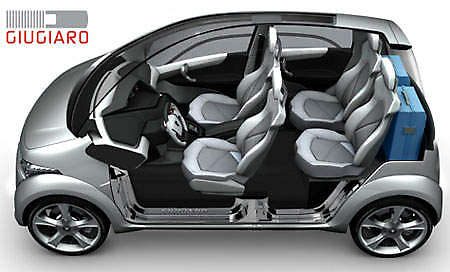
The interior (which you can see above – we’re in the midst of getting better pix) is said to feature two TFT monitors in the center mounted at a concave angle. The right hand monitor shows the speedo and various other vital statistics of the car such as the hybrid system energy flow diagrams, while the left hand monitor handles the in-car entertainment and communication settings, including a browser for internet access. A third display located beneath the center console is a touch screen display that allows you to control various car functions.
“The unveiling of the concept cars today reflects the long-term strategy we have in matching global automotive standards as we expand and reinforce our presence worldwide. We strive to listen to our customers to ensure the development of a global car that meets customer’s requirements and expectations. The aim is to produce the global car for world market in the future,” said Proton managing director Dato Syed Zainal. According to DSZ, the car is between 17 to 24 months away from production, so we’re looking at a 2012 to 2013 launch date!
We’ll be back very soon with some more info from our man Danny on the floors of Geneva with more live photos of the car as well as perhaps some videos. Look after the jump for a full spec sheet as well as product images.
Dimensions and weights
| Length (mm) | 3555-3000 |
|---|---|
| Height (mm) | 1576 |
| Width (mm) | 1699 |
| Wheelbase (mm) | 2590-2035 |
| Front tyres | 215/45 R18 |
| Rear tyres | 215/45 R18 |
| Front rims | 18" |
| Rear rims | 18" |
| Boot capacity | 320-390 litres |
Mechanical units and performance
| Mechanical architecture | hybrid, series, plug-in |
|---|---|
| Internal combustion engine position | front transverse |
| Technical specifications | 3 cylinders in line, 6 valves, 1.2 litres |
| Power | 51 hp / 38 kW at 3500 rpm |
| Maximum torque | 107 Nm at 2500 rpm |
| Electric engine position | Rear |
| Power | 75 kW (peak), 45 kW (continuous) |
| Maximum torque | 240 Nm |
| Batteries | 100 X 31 Ahr Cells 370 Volts 11.47 kWh |
| Time for full recharge | 3 hours with normal 240 Volt, 13A power point |
| Acceleration 0 – 100 km/h | 14 sec |
| Top speed | 170 km/h (peak), 130 km/h (continuous) |
| Range in electric mode | 50 km |
| Traction | Rear |
| One-speed gearbox | final drive ratio 4.214:1 |
| Front & Rear suspension | McPherson & Torsion beam |
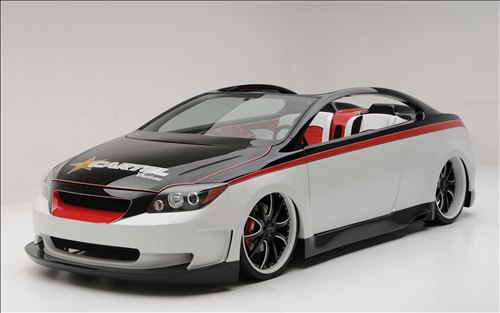
Epic Cartel has released a new customization kit for the Scion TC at this year's SEMA show. The Epic Cartel Scion TC has been 3" with B-Pillars and center glass roof section has been removed and reinforced completely.
The Epic Cartel Scion TC customization kit includes: TRD Supercharger Kit, TRD LSD Unit, Cartel Side Exit Exhaust, DME Sport Header, Master Image Air Bag Kit, Factory Suspension Points Re-engineered & Relocated, 22×8 Cartel Designed Billet 3-Piece Forged Vellano Rims and TOYO Proxes 4 235/30/ZR22.
The Epic Cartel Scion TC comes with a 3" Roof Line Chop, Center Glass Top and B-Pillars Removed, Custom Metal Fabrication Interior & Exterior Panels, Pearl White Base Paint with Two-Tone Graphics & Ghosted Logos Throughout, Custom ED Front & Rear Bumpers and Custom Rear Hatch Formed & Vacuum Seal Molded.
[Source: Scion]

The 2009 Dodge Viper SRT10® is the ultimate American sports car and the icon of the Dodge brand.
For 2009, the Dodge Viper SRT10 offers the outrageous power expected, with an 8.4-liter 600-horsepower (450 kW) V-10 engine contributing to blistering acceleration (0-60 mph in less than four seconds, 0-100-0 mph in the low 12-second range), setting an American sports car benchmark.
A dramatic hood featuring a larger, more efficient hood scoop for air induction and functional hood louvers to facilitate a greater cooling effect enhance Viper’s bold, aggressive looks. Viper design hallmarks, including deep-cut side scallops, swept-back fenders, lowered hood lines and the signature Dodge crosshair grille remain.
The 2009 Dodge Viper SRT10 will be available in four new exterior colors: Anaconda Green Pearl Coat, Graphite Metallic Clear Coat, Diamond Black Pearl Coat and Viper Bright White Clear Coat.
“With the 2009 Dodge Viper SRT10, we’re carrying on the proud tradition of very powerful artillery for sports-car enthusiasts,” said Kipp Owen, Director – Street and Racing Technology (SRT) Engineering, Chrysler LLC. “With 600 horsepower, 560 lb.-ft. of torque and 0-to-60 performance in less than four seconds, the 2009 Dodge Viper SRT10 remains the benchmark for the ultimate American sports car.”
WHAT’S NEW FOR 2009
EXTERIOR
• Four new exterior colors: Anaconda Green Pearl Coat, Graphite Metallic Clear Coat, Diamond Black Pearl Coat and Viper Bright White Clear Coat
• New optional six-spoke forged aluminum wheel (replaces H spoke wheel)
INTERIOR
• Revised center console bezel houses recessed window switches
POWERTRAIN/CHASSIS
• Modified steel frame
• Modified fuel tank and filler
DESIGN
The 2009 Dodge Viper SRT10 remains available in two body styles — Roadster and Coupe. Both feature a dramatic hood with a more efficient hood scoop for air induction and functional hood louvers to facilitate a greater cooling effect for the powerful 8.4-liter 600-horsepower V-10 engine underneath.
Four new exterior colors will be introduced throughout the 2009 model year — Anaconda Green Pearl Coat, Graphite Metallic Clear Coat, Diamond Black Pearl Coat and Viper Bright White Clear Coat. Dual, painted hood stripes continue to be an option with seven stripe colors available. With a total of eight exterior colors, seven stripe colors and five interior choices, customers have more than 30 exterior/interior combinations to choose from.
Several exterior differences exist between the 2009 Dodge Viper SRT10 Roadster and Coupe. In fact, the only body panels the Roadster and Coupe share are front fascia and fenders, hood and doors. However, all of the iconic Viper SRT10 design cues are consistent in both models, including the signature Dodge crosshair grille, deep-cut side scallops, swept-back fenders and lowered hood lines.
The Dodge Viper SRT10 Coupe’s hardtop with its “double bubble” styling makes it even more torsionally stiff than the Roadster. The 2009 Dodge Viper SRT10 Coupe offers increased downforce and high-speed stability with its sloping roofline and deck lid spoiler. Plus, the Dodge Viper SRT10 Coupe has an additional 6.25 cubic feet of trunk space than the Viper SRT10 Roadster, for a total of 14.65 cubic feet. The roof and headliner structure offer more room to accommodate a safety cage, while maintaining as much head room as possible.
The 2009 Dodge Viper SRT10 Roadster and Coupe cockpit retains its characteristic red push-button starter and performance-oriented, highly functional instrument panel with center-mounted tachometer and 220-mph speedometer.
Five interior colors will be available in 2009: black, black/red, black/blue, black/medium slate or black/natural tan. A choice of bezel finishes on the center instrument panel and console adds to the increased level of customization.
ENGINEERING
The 2009 Dodge Viper SRT10’s deep-skirted V-10 aluminum block features 8.4 liters (510 cubic inches) and generates 600 horsepower (450 kW) and 560 lb.-ft. (760 N•m) of torque. And all the power is compliant with stringent regulatory requirements, such as federal Tier 2, Bin 5 and California’s Low Emission Vehicle (LEV II) mandates.
The 2009 Viper SRT10 engine features cylinder heads equipped with Computer Numerically Controlled (CNC)-shaped combustion chambers, larger valves and Variable Valve Timing (VVT) featuring award-winning CamInCam® technology. The VVT application used in the 2009 Dodge Viper SRT10 electronically adjusts when the exhaust valves are opened and closed according to engine speed and load, allowing the engine to “breathe” more cleanly and efficiently.
The 2009 Dodge Viper SRT10 V-10’s two-piece intake manifold combines a cast-aluminum lower plenum with smooth runners for better air flow, bolted to a die-cast aluminum upper plenum. The air-cleaner box with a low-restriction filter sends air through dual electronic throttle control modules into the intake plenum.
The air-fuel mixture in the cylinders is ignited by platinum-tip spark plugs fired by individual plug coils mounted on the cylinder-head covers.
Within the cylinders, pistons are equipped with large-diameter floating pins in bronze bushed rods for high-load capability. The forged powder-metal connecting rods are secured with aircraft-quality fasteners for increased fatigue strength.
Engine lubrication is managed by an oil pump and a swinging oil pickup adapted from the Viper Competition Coupe engines, to improve oil pressure in high-rpm and hard-cornering conditions.
Spent gases exit through tubular air-gap headers, which not only improve exhaust flow, but also ensure quick catalyst light-off for improved emission control. The headers’ stamped stainless-steel outer shell acts as a thermal heat shield for the individual stainless-steel runners that contribute to better flow separation and exhaust tuning.
The 2009 Dodge Viper SRT10’s V-10 channels its power through a twin-disc clutch. The ZF Sachs clutch reduces rotating inertia by 18 percent, reduces clutch-pedal effort and improves engagement feel.
Transferring the Dodge Viper SRT10’s power to the rear wheels is a heavy-duty six-speed manual transmission.
Stopping power is another carefully developed part of the Viper SRT10 equation, with 14-inch brake rotors gripped by Brembo 44/40 dual opposing piston calipers in the front and Brembo 42/38 dual opposing calipers in the rear. This system results in a world-class braking performance of 60-0 mph in less than 100 feet.
Dodge Viper SRT10 performance is further defined by a race-bred aluminum, fully independent, four-wheel suspension featuring lightweight, high-performance aluminum control arms and knuckles, damped by lightweight coil-over shock absorbers. Power is delivered to the pavement via a Dana M44-4 rear axle and a new 4-pinion GKN ViscoLok speed-sensing limited-slip differential for higher torque capacity and improved traction.
The 2009 Dodge Viper SRT10 rides on polished forged aluminum 18 x 10-inch front and 19 x 13-inch rear wheels, clad in Michelin Pilot Sport PS2 non-run-flat tires. Each tire includes low-pressure sensors in the valve stem.
PRODUCT HIGHLIGHTS
• The 2009 Dodge Viper SRT10 generates 600 horsepower (450 kW) and 560 lb.-ft. (760 N•m) of torque from its 8.4-liter (510-cubic-inch) V-10 engine
• SRT performance: 0-60 mph in under four seconds, quarter-mile time in the low 12-second range, 0-100-0 mph in the low 12-second range and 60-0 mph braking in under 100 feet
• Dodge Viper SRT10 continues the Viper tradition of setting the definition of extreme, while delivering performance enthusiasts a refined, yet outrageous and powerful American sports car
• Dodge Viper SRT10 features Viper’s long-held, back-to-basics sports car approach, including a traditional front-engine, rear-wheel-drive layout with six-speed transmission; race-bred, fully independent four-wheel suspension; massive tires and wheels for maximum grip; and world-class brakes for benchmark stopping power
• The 2009 Dodge Viper SRT10 features a hood with functional air intake and extractors that contributes to its aggressive appearance
• Dodge Viper SRT10 is part of a broad lineup of Street and Racing Technology (SRT) vehicles developed under the credo: “Race inspired, street legal”
• Offering SRT’s signature “bang for the buck,” the Dodge Viper SRT10 outperforms sports cars costing more than twice as much
• Dodge delivers the ultimate purpose-built, street-legal track car with the 2009 Viper SRT10 ACR (American Club Racer)
o 2009 Dodge Viper SRT10 ACR offers reduced weight compared to the Dodge Viper SRT10, race-ready hardware and competition tuning for optimal on-track performance
o Aerodynamic improvements, racing suspension and weight savings equal unmatched performance for under $100,000
SAFETY AND SECURITY
• Adjustable Pedals
• Advanced Multi-stage Front Air Bags with Occupant Classification System (OCS)
• Anti-lock Brake System (ABS)
• BeltAlert
• Center High-mounted Stop Lamp (CHMSL)
• Constant Force Retractors (CFR)
• Energy-absorbing Steering Column
• Interior Head-impact Protection
• Knee Bolsters
• Occupant Classification System (OCS)
• Remote Keyless Entry
• Three-point Seat Belts with Pretensioners
• Tire Pressure Monitoring (TPM)
COLOR AVAILABILITY
• Anaconda Green Pearl Coat
• Graphite Metallic Clear Coat
• Diamond Black Pearl Coat
• Viper Bright White Clear Coat
• Viper Red Clear Coat
• Venom Red Metallic Clear Coat
• Viper Bright Blue Pearl Coat
• Viper Bright Orange Pearl Coat
DUAL, PAINTED HOOD STRIPE COLOR AVAILABILITY
• Stone White
• Viper Black
• Viper Bright Silver Metallic
• Graphite Metallic
• Viper Bright Blue Pearl Coat
• Viper Red Clear Coat
• Viper Bright Orange Pearl Coat
MANUFACTURING INFORMATION
• 2009 model year production start: Fall 2008
• Production location: Conner Avenue Assembly Plant in Detroit
• 8.4-liter V-10 engine: Conner Avenue Assembly Plant in Detroit
• 6-speed manual transmission: Tremec transmission plant, Queretaro, Mexico
MARKET POSITION


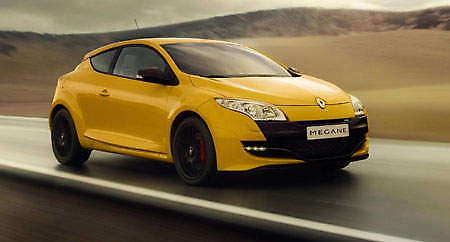
The latest generation Megane has been given the Renault Sport touch. Under the hood is a 250 horsepower twin-scroll turbocharged 2.0 liter inline-4 motor that puts out 340Nm of torque at 3,000rpm, with 80% of that available from as low as 1,900rpm. That puts it well over the power figures that the Mk6 Golf GTI manages to make.
The engine is mated to a 6-speed manual transmission, and provides for a 0 to 100km/h acceleration time of about 6.1 seconds. The 2.0 liter turbo engine is claimed to be 25% new compared to the Megane F1 Team R26 engine. It has new intake ports, reinforced pistons and conrods, new air-air and water-oil intercoolers, sodium-cooled valves, and new piston ring carriers.

The Megane RS is one of the few C-segment hot hatches that actually gives the buyer the option of two chassis configurations – the Sport chassis which is more of an everyday hot hatch kinda thing, and the Cup chassis which is more track-focused, perhaps like the Civic Type R. The Cup option even has an optional mechanical LSD provided by GKN Driveline, which is seen as something that’s getting abit rare lately with cheaper performance cars. The pure LSD is slowly being replaced by e-LSDs.
There’s also a cool tool called the Renault Sport Monitor, which is basically an on-board telemetry system. It provides various readings (controllable via the steering wheel) such as turbo boost pressure, oil temp, brake status, real-time engine performance data, a G-meter, a stopwatch with memory functions and various counter features such as 0 to 100km/h acceleration times and 400m times.
Sponsor Links
Convert Your Car Into A Water Hybrid!
Save Up To 50% On Fuel Cost
Spent Your Money For Something Else!
http://hho-booster.info
Run Your Car On Water + Gas
Triple Your Mileage
Need To See To Believe!
http://www.cargoh2o.com
Convert Gas Car To Electric
Never Pay For Gas Again
Drive Your Car For Pennies Per Mile!
http://gas2electric.net/index1.html